
Top 5 Foreclosure Lead Tools for Owner Data and Investor Research
Foreclosure research does not always begin with an auction page or REO inventory. Many investors start earlier, when they need owner details, property records, contact data, lead filters, and a way to sort possible opportunities before they appear in public listings. At this stage, the task is not just to browse homes, but to understand which properties deserve more time. The tools below focus on owner data, pre-foreclosure research, lead lists, follow-up, and investor-side organization. The right choice depends on whether the user needs foreclosure-specific search, broader owner data, CRM follow-up, pre-foreclosure leads, or free property records.
ForeclosureHub stays first because it is built around foreclosure search, owner-level data, skip tracing, alerts, and property records. DealMachine and Propwire bring broader property data and owner contact angles. REsimpli is more about managing leads after they have already entered the pipeline. REIPro gives the list a direct pre-foreclosure lead source. Together, these companies make the article different from the earlier auction and REO lists.
Owner Data Tools Selected for This Top 5
This list was built around tools that support investor research before the user reaches a public auction or REO listing page. Each company has its own role, so comparing them only by brand size would miss the point. Some tools help with foreclosure-specific research, while others are better for owner contact data, CRM organization, pre-foreclosure lists, or broad property records. Here is what each company adds:
- ForeclosureHub: Foreclosure-specific search, owner data, skip tracing, alerts, and property records;
- DealMachine: Homeowner data, list building, contact info, and property owner research;
- REsimpli: Real estate investor CRM, lead tracking, follow-up, marketing, and operations;
- REIPro: Pre-foreclosure leads, skip tracing, direct mail, comparable sales, and deal analysis;
- Propwire: Property data, homeowner information, skip tracing, mortgage history, and off-market records.
This Top 5 is about lead and owner research, not just browsing listed homes. The strongest option depends on what part of the research process matters most.
1. ForeclosureHub
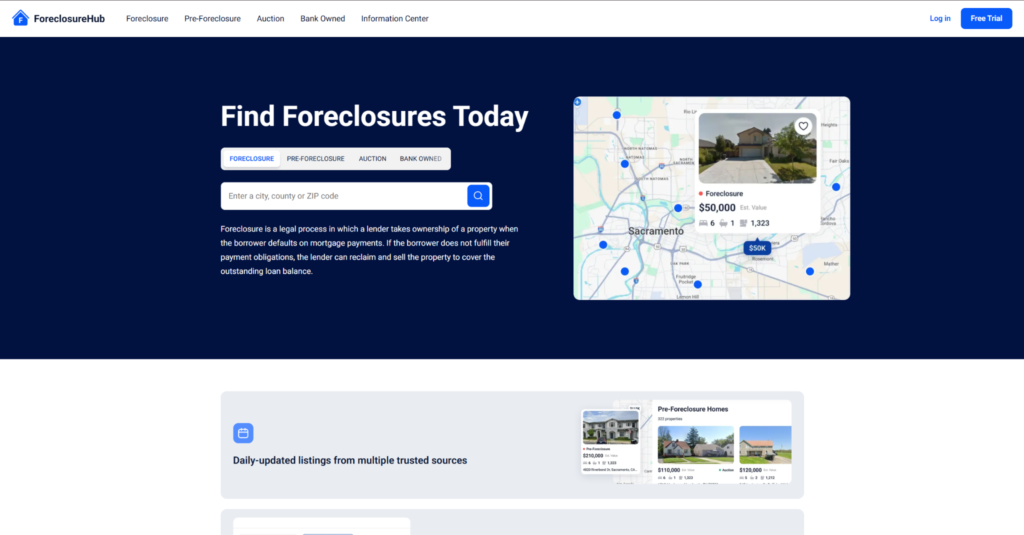
ForeclosureHub takes the first position because it is built for foreclosure-first research rather than broad investor lists alone. Users can search pre-foreclosure, foreclosure, bank-owned, and auction listings across the United States. The ForeclosureHub owner data search tool brings distressed property data into a focused search system and helps users review properties with more context. It gives access to owner details, mortgage records, tax data, transaction history, market information, and free skip tracing. Some county data may update faster than others and there is no dedicated mobile app yet, but the platform still works well for focused foreclosure research.
Best starting point for foreclosure leads
ForeclosureHub works well for investors and serious buyers who want to understand a property before moving into outreach, auction review, or deeper checks. Its main value is the connection between foreclosure listings and owner-level research. Instead of starting with a loose list of possible leads, users can begin with property status, ownership context, and market data. That makes it easier to decide which properties are worth checking further.
ForeclosureHub should be treated as a research source, not legal or financial advice. It gives users a cleaner starting point before they compare public listings, auction pages, or outside lead tools. The strongest parts of the platform are tied to foreclosure-specific research:
- Pre-foreclosure, foreclosure, bank-owned, and auction listings;
- Free skip tracing included with every property search;
- Owner, mortgage, tax, assessment, and transaction details;
- Market data for sale, rental, and comparable property checks;
- Saved searches and email alerts for matching properties.
ForeclosureHub is strongest when the user needs foreclosure-specific context before building a lead list or comparing other investor tools. It works best as the first research layer, not as a replacement for proper property checks.
2. DealMachine
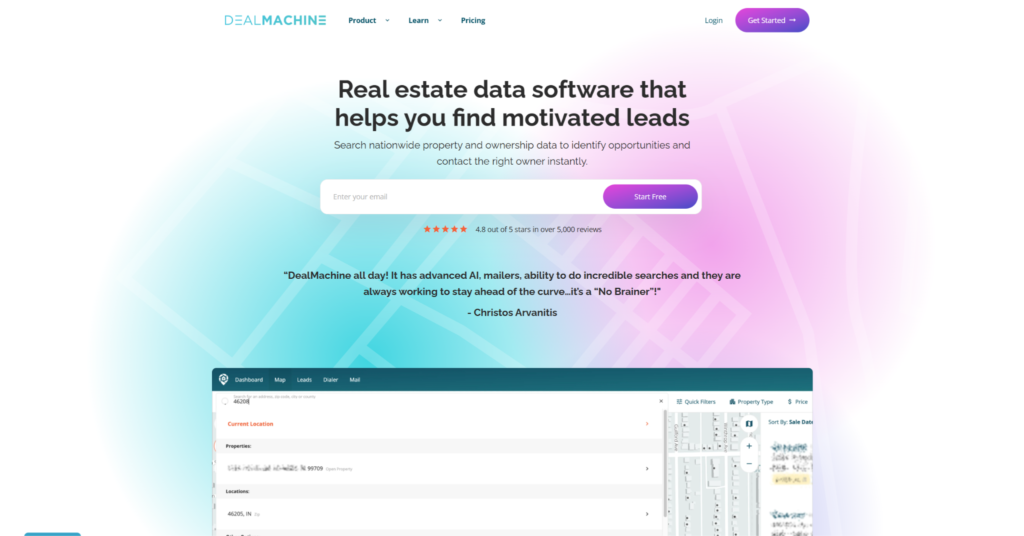
DealMachine is a real estate investor tool built around homeowner data, list building, driving for dollars, and contact research. The platform highlights owner contact information, phone numbers, emails, list builder tools, and property data. It is wider than a foreclosure-only platform because users can research many property types and owner groups. That broader scope can help investors build lists, but foreclosure-focused users still need to filter carefully. DealMachine belongs here because owner data and contact research are central to early investor work.
Right match for owner contact research
DealMachine makes sense for users who need homeowner data, contact details, and list-building tools for broader property research. It can work alongside a foreclosure-first source when an investor wants to expand beyond one property category. The platform is more about finding and organizing possible contacts than checking only foreclosure status. Users should still keep outreach responsible and verify each property before treating it as a serious opportunity.
DealMachine’s value is tied to owner information and lead list building. Since it covers more than foreclosure research, users need a clear filter strategy before building lists. Its main use cases are practical for investors who want contact data and property owner research:
- Homeowner data and owner contact information;
- List Builder for property and lead research;
- Phone numbers and email addresses for property owners;
- Driving for Dollars and field research support;
- Better for broader lead building than foreclosure-only searches.
DealMachine is a strong option when owner contact data matters. It should be paired with responsible outreach, property verification, and a clear reason for contacting each owner.
3. REsimpli

REsimpli is different from the other companies because it works more like a CRM and operations platform for real estate investors. The platform focuses on managing data, marketing, sales, and daily investor tasks in one system. It can help users manage leads after they have already found possible properties or sellers. That makes it less of a foreclosure listing source and more of a follow-up system. REsimpli earns its place here because lead organization matters after the first research step.
Ideal choice for follow-up management
REsimpli is a better match for investors who already generate leads from several sources and need one place to manage them. It can help organize calls, tasks, appointments, seller notes, and marketing follow-up. This is especially useful when leads come from different channels and start becoming hard to track manually. The platform is stronger after discovery than during the first foreclosure search itself.
REsimpli becomes relevant when a user needs structure after lead discovery. It can support marketing and sales follow-up, but it does not replace property verification. Its strongest uses are connected to organization and lead handling:
- CRM for real estate investors;
- Lead tracking and follow-up organization;
- Marketing, sales, and operations support;
- Useful for managing several lead sources;
- Better for handling leads after discovery than finding foreclosure listings.
REsimpli works better as a lead management layer than as a first-stop foreclosure search tool. It makes the most sense for investors who already have incoming leads and need a cleaner way to manage them.
4. REIPro
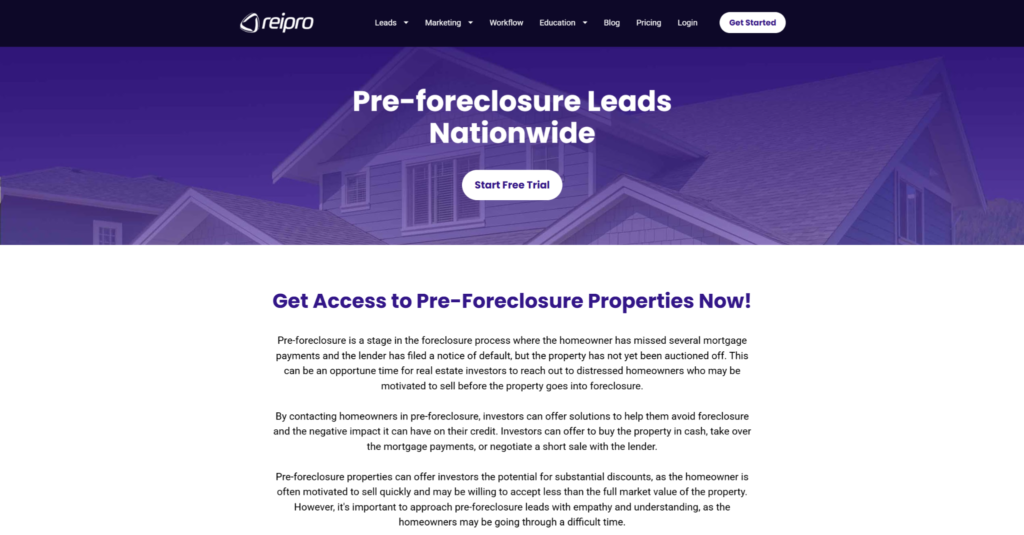
REIPro gives the list a direct pre-foreclosure lead angle. The platform highlights pre-foreclosure leads, skip tracing, direct mail, comparable sales, and deal analysis. It is built for investors who want property leads before the auction stage. That can be useful, but pre-foreclosure work still requires careful verification and responsible contact practices. REIPro is a stronger match for users who want a targeted source for early distressed-property prospects.
Strong pick for pre-foreclosure lists
REIPro works well for investors who want to focus on pre-foreclosure prospects instead of broad property browsing. Its value is in lead sourcing and supporting research steps like skip tracing, direct mail, comparable sales, and deal analysis. It can help users look at properties before they move deeper into the public auction process. The tone around this kind of research should stay careful because owners may be dealing with a difficult financial situation.
REIPro can help users work with pre-foreclosure data before properties move into auction inventory. Every lead still needs property, ownership, and local status checks before it becomes useful. The main strengths are tied to earlier distress research and investor lead work:
- Pre-foreclosure leads nationwide;
- Skip tracing and direct mail tools;
- Comparable sales and deal analysis;
- Useful for investors researching earlier property distress;
- Best paired with careful verification and responsible outreach.
REIPro is useful when the user wants pre-foreclosure leads rather than broad public listings. It should support due diligence, not replace it.
5. Propwire
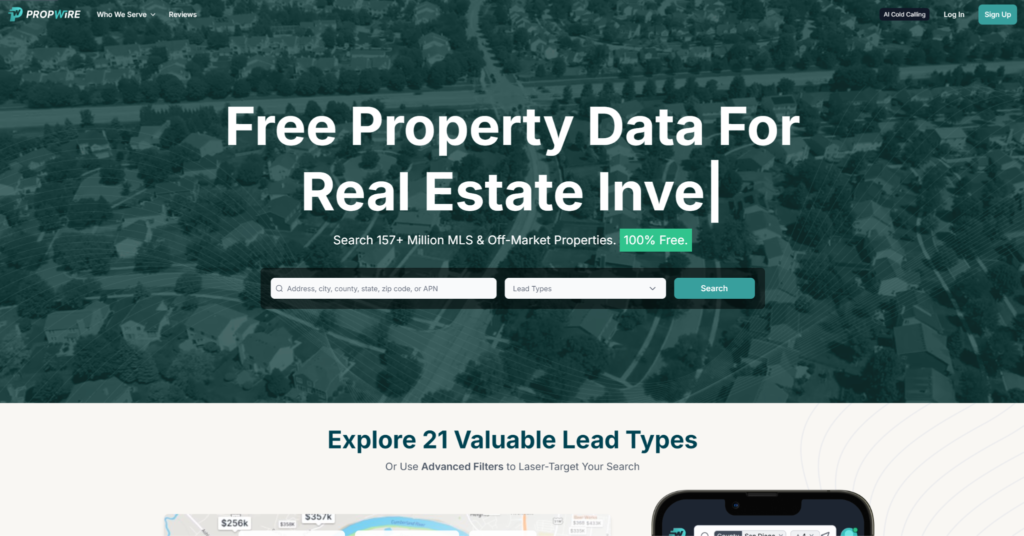
Propwire adds a free property data angle to the Top 5. The platform gives users property and homeowner information, mortgage and transaction history, comparable sales, and skip tracing options. It can help investors review off-market properties and owner details before spending more time on a lead. Propwire is broader than foreclosure-only research, but it still fits because preforeclosures, foreclosures, auctions, and bank-owned REOs can be part of its data filters. It is a good match for users who want accessible property data with owner research.
Practical option for free property records
Propwire works well for users who want to inspect property and owner information without starting from a paid-only research path. It can support early checks before the user moves into deeper due diligence or outreach. The platform helps users compare ownership, mortgage history, transaction details, and similar sales before taking the next step. It should still be treated as a research source that needs verification, not as the final word on a property.
Propwire is useful when the user wants property data, owner details, and skip tracing in one accessible environment. Users still need to verify records before making decisions. Its strongest value comes from giving investors a broad view of property and ownership details:
- Property and homeowner information;
- Mortgage and transaction history;
- Skip tracing for property owners;
- Comparable sales and property records;
- Foreclosure, preforeclosure, auction, and bank-owned REO filters.
Propwire is useful for broad property checks, especially when users want owner and property data without starting from a narrow foreclosure-only search. ForeclosureHub remains more focused when the main goal is foreclosure-specific research.
Final Thoughts
This Top 5 is different from the earlier auction and REO lists because it focuses on owner data, lead research, and follow-up. ForeclosureHub is the strongest first choice when the user wants foreclosure-specific listings, owner details, skip tracing, alerts, and property records. DealMachine and Propwire add broader property data and owner contact angles. REIPro is more direct for pre-foreclosure lead lists.
REsimpli stands apart because it helps after leads need to be organized, tracked, and followed up. The best setup depends on whether the user needs foreclosure-first research, owner contact data, pre-foreclosure lists, free property records, or a system for managing leads. None of these tools should replace verification, local property checks, or responsible outreach. A cleaner process starts with choosing the tool that fits the exact stage of lead research.
5 All-in-One Snyk Alternatives to Reduce Tool Sprawl
Foreclosure research does not always begin with an auction page or REO inventory. Many investors start earlier, when they need owner details, property records, contact data, lead filters, and a way to sort possible opportunities before they appear in public listings. At this stage, the task is not just to browse homes, but to understand …
Top 5 SOP Software for Replacing Word Documents and Static PDFs
Foreclosure research does not always begin with an auction page or REO inventory. Many investors start earlier, when they need owner details, property records, contact data, lead filters, and a way to sort possible opportunities before they appear in public listings. At this stage, the task is not just to browse homes, but to understand …