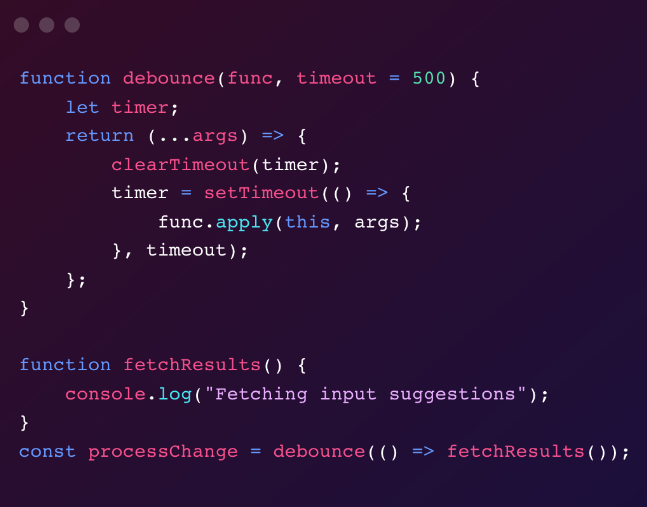

The debounce methodology in JavaScript serves as a crucial tool for enhancing function efficacy, particularly when dealing with functions triggered frequently. Common instances where this technique proves invaluable include managing real-time user input and adapting to changes in window dimensions. By adopting this approach, it’s possible to postpone the activation of a targeted function until …

JSON (JavaScript Object Notation) is a widely used data interchange format due to its simplicity and ease of use. When working with JSON data in JavaScript, you may often come across situations where you need to format or “pretty-print” the JSON for better readability. Pretty-printing JSON makes it easier to debug, understand, and work with, …

JavaScript, one of the most popular programming languages in the world, provides various tools and constructs to make your code more efficient and readable. However, one area that often perplexes developers is the use of switch statements for handling conditional logic. While switch statements can be useful, they can also lead to bloated, hard-to-maintain code. …

JavaScript is a versatile programming language that provides developers with a wide range of tools for working with strings and manipulating data. When dealing with web development and handling URLs, you often need to encode and decode special characters to ensure data integrity and security. Two commonly used functions for this purpose are encodeURI() and …

JavaScript is a versatile and dynamic programming language widely used for web development. One common task in JavaScript is converting objects into different data structures for various purposes. One such conversion is transforming objects into maps. In this article, we will explore why you might want to convert objects to maps, how to do it, …

Learn how to efficiently replace or append values in a JavaScript array using the spread operator and Array.prototype methods. This comprehensive guide covers the process of creating a shallow copy of an array, finding the index of elements, and performing replacements or appends with ease. Boost your coding skills and optimize your arrays today! Array …

When working with Javascript for handling numerical data or mathematical calculations, developers often encounter a unique and somewhat perplexing value: NaN (Not-a-Number). It is a value so exceptional that it doesn’t equate even to itself. This article provides a comprehensive view on this unique value, why it exists, how to detect it, and much more. …
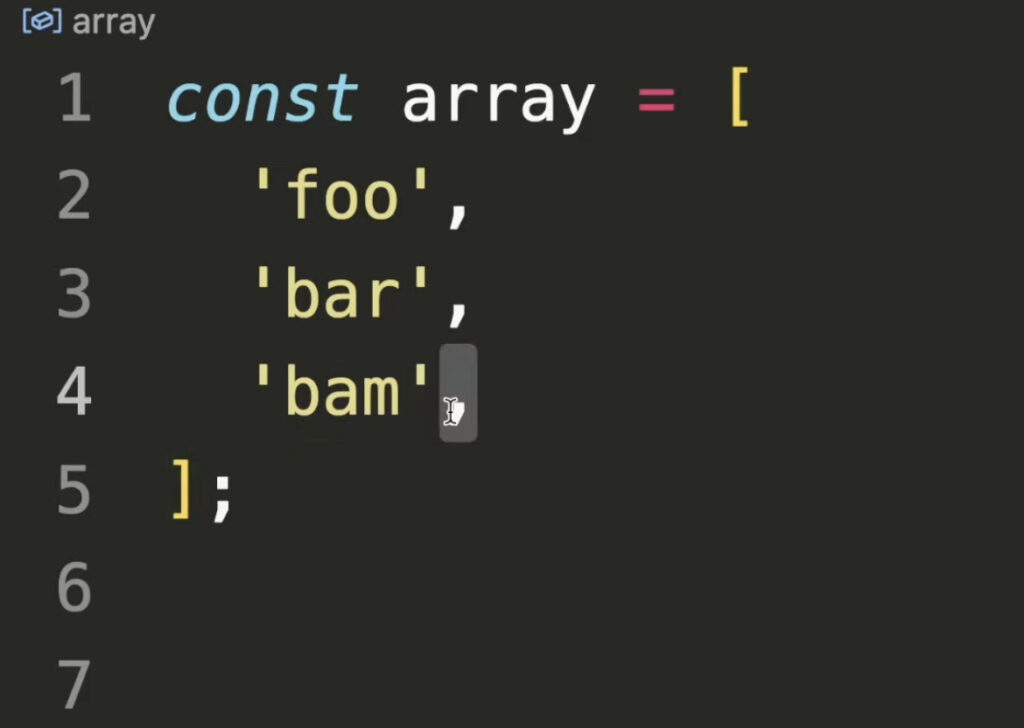
In the realm of JavaScript syntax, heated debates often ensue among developers, with contentious topics like semicolons versus tabs versus spaces taking center stage. Yet, one aspect that tends to linger in the shadows of discussion is the subtle power of trailing commas. Since the ES5 specification, JavaScript has welcomed trailing commas within array and …
In the transformation of a comma-separated values (CSV) string into a 2D array, the following steps are employed: 1. Detection of the Newline Character – Utilize Array.prototype.indexOf() to identify the initial occurrence of the newline character (\n). 2. Removal of the Title Row (if specified) – Use Array.prototype.slice() to eliminate the first row (commonly known …

In this section, we will explore a method for obtaining the scroll position of the current web page. The narration will be presented in the third person for clarity and readability. Overview To retrieve the scroll position of the current page, developers can utilize the following approach. This method is versatile and can be used …