

Appending a value or values from an array in JavaScript is a frequently encountered task. Although it is not particularly challenging, there are several methods at your disposal, each with its own advantages and disadvantages. The choice of the most suitable method ultimately hinges on the specific use case. Array.prototype.push() The conventional approach for adding …

JavaScript offers two properties for accessing the textual content within an element: Node.textContent and HTMLElement.innerText. These properties may seem interchangeable, and indeed, many developers use them interchangeably without realizing the significant distinctions between the two. Similarities Examining the similarities between these two properties before delving into their differences can provide valuable insights. This approach …

JavaScript, renowned for its versatility and widespread adoption, boasts a unique facet that significantly influences its operation: the concept of truthy and falsy values. These fundamental notions serve as linchpins in conditional logic, comparative operations, and type coercion within the JavaScript ecosystem. In this article, we embark on a comprehensive exploration of truthy and falsy …
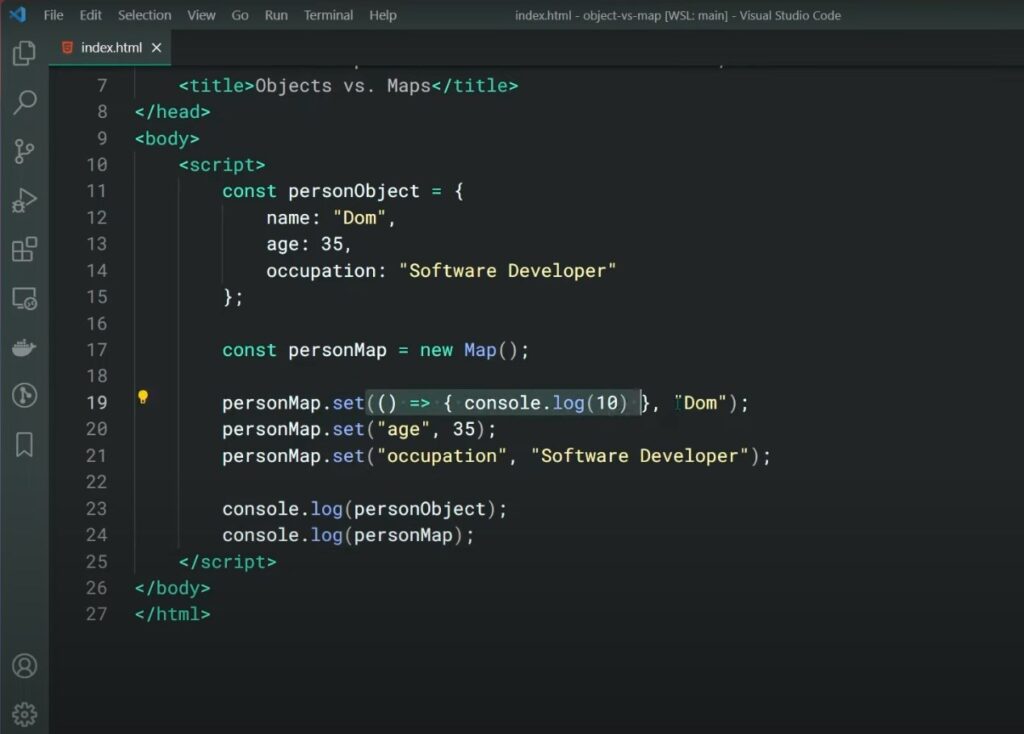
Maps and JavaScript objects are fundamental data structures used in web development to store and manage collections of key-value pairs. While maps have unique advantages in certain scenarios, in some cases, transforming a map into an object can simplify data manipulation and organization. In this article, we will delve into the process of converting JavaScript …

In the programming universe, especially when dealing with JavaScript, iteration is a technique often employed for various tasks. One might think the for…of statement is limited when it comes to fetching both index and value during iterations. However, this guide will demystify the full range of options you have with for…of, and how you can …

Delays are critical in programming for various purposes like data fetching, animations, and even for debugging. Although JavaScript doesn’t offer a native sleep() function for this, multiple alternatives exist. This comprehensive guide digs deep into the pros, cons, and best practices for implementing delays or sleep functionalities in JavaScript. How to Create a Time Delay …

JavaScript employs a pass-by-value mechanism for managing data types, treating everything as a value type by default. However, this straightforward approach takes an intriguing twist when it encounters objects. The intrigue arises from the fact that objects are considered reference types, yet they are passed by value. While this may initially appear contradictory, it’s crucial …
JavaScript, a versatile and widely used programming language, offers developers the flexibility to choose between synchronous and asynchronous coding approaches when designing web applications. These two paradigms play a pivotal role in determining how tasks are executed and how user experiences are managed. In this article, let’s delve into the fundamental differences between synchronous …
In the realm of JavaScript development, identifying whether a specific sequence of characters exists within a larger string is commonplace. Various strategies are available for this task, each with its advantages and limitations. The Method of String.prototype.includes() A straightforward way to verify if a given string harbors a particular substring is through the includes() function. …

Array comparison might seem like a straightforward task in JavaScript, but as you dig deeper, you’ll discover the intricacies involved in accurately assessing arrays. It’s not just about checking if they look alike; it’s about understanding their content and structure. In this comprehensive guide, we’ll explore the multifaceted world of comparing arrays in JavaScript. Beyond …